
If you’re shopping for a summer quilt, you’ve likely noticed two features dominating the marketing: “c” and “instant cool.” Traditional summer quilts achieve these through chemical treatments or fabric weaves. But a new category — quilts genuinely filled with food-grade silicone — offers these benefits through the material’s inherent properties. Today we discuss the first one — anti-mite.
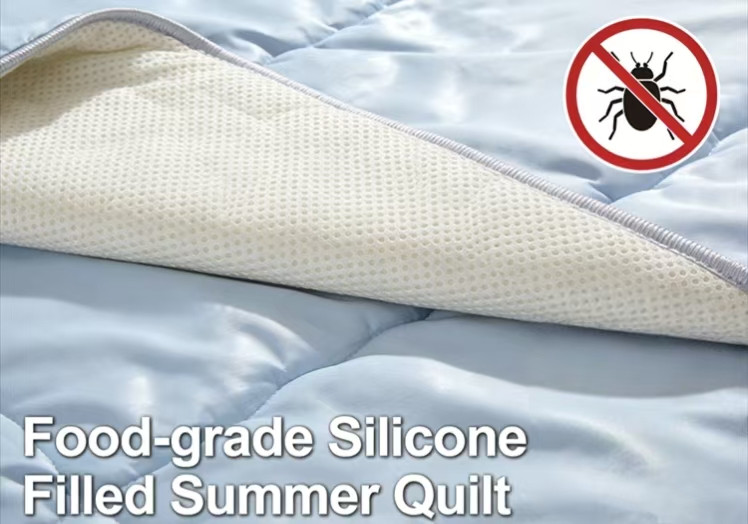
The Anti-Mite Advantage: A Surface That’s Inhospitable
House dust mites are a primary trigger for allergies. They thrive in warm, humid environments, feeding on dead skin cells trapped deep within fabric fibers. Traditional quilts provide the perfect habitat.
Food-grade silicone changes the game in two fundamental ways:
- Non-Porous, Zero-Food Surface
Silicone’s core structure is non-porous and hydrophobic. This means: No Moisture, No Mites. Mites require humidity to survive. Silicone doesn’t absorb sweat or ambient moisture, creating a dry environment that mites cannot colonize. No Food Source: Mites feed on organic debris. A silicone surface doesn’t trap skin cells or dander—they simply sit on the surface and are easily washed away.
- Proven Anti-Biofouling & Antimicrobial Action
Some advanced silicones have a “water-driven surface restructuring” property. When exposed to moisture, their surface rearranges to become hydrophilic, actively resisting protein adhesion and biofilm formation. This means allergens simply cannot stick. Applied to a quilt, this means allergens are held at the surface until your next wash cycle, rather than being breathed in all night.
- The Washability Factor
While a traditional “cooling” summer quilt might use a chemical finish to deter mites and a special weave for airflow. A true silicone fill can be machine washed and dries quickly, physically removing allergens that become permanently trapped in cotton or polyester batting.
Learn more: http://www.springtextile.com Or Spring Hometextile video channel: www.youtube.com/channel/UCMCz-yKQMYxA1e2Uscw5PHw Also can contact Tina at: [email protected]